Before the baby, the morning dog walk was the easiest part of the day. After the baby, it's a three-body problem: one adult, one stroller that needs two hands, and one dog who has opinions about squirrels. If you've been searching for a dog leash that clips to stroller frames — or just googling "how do people walk a dog and push a stroller at the same time" at 6 a.m. — this guide is for you. The short answer: with the right attachment point, the right setup, and a little training, one person can absolutely do both. Here's the complete system.
Why the Obvious Solutions Don't Work
Every new parent tries the same three things first, in roughly this order:
Holding the leash and the handlebar together. Workable for exactly as long as your dog walks in a perfectly straight line. The first lunge torques the stroller sideways, and now you're steering one-handed with a wrist full of leash.
Looping the leash over the handlebar. This is the one that worries pediatricians and dog trainers alike. A leash tied or looped high on the handlebar gives your dog leverage at the stroller's tippiest point. A hard pull doesn't just tug — it can lift or tip a lightweight stroller.
The wrist or waist leash. Better, but your body is still the anchor, which means a sudden pull yanks you, and you're attached to the stroller. The dog's energy still reaches the baby through you.
The actual fix is changing where and how the leash attaches: low on the stroller frame, with a clip that's designed for the job, on a line you can lock short.
The Stroller Trick: Clip Low, Lock Short
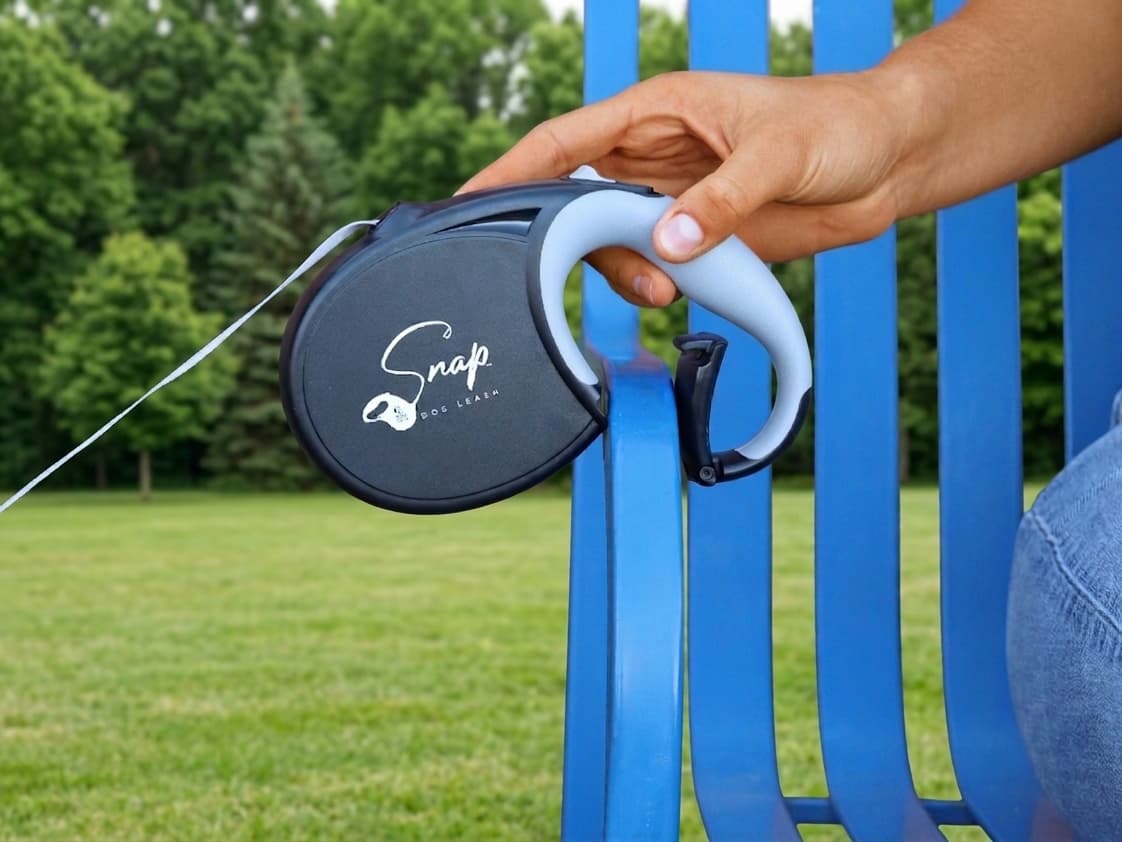
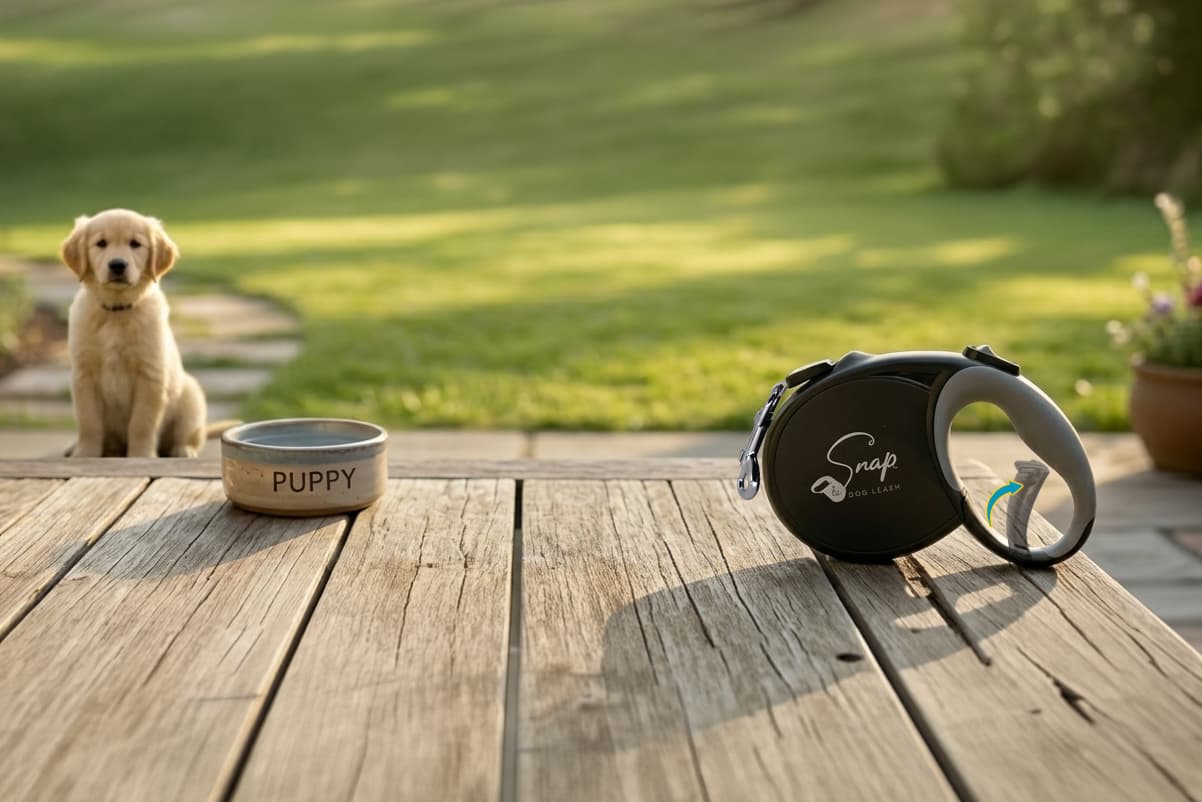
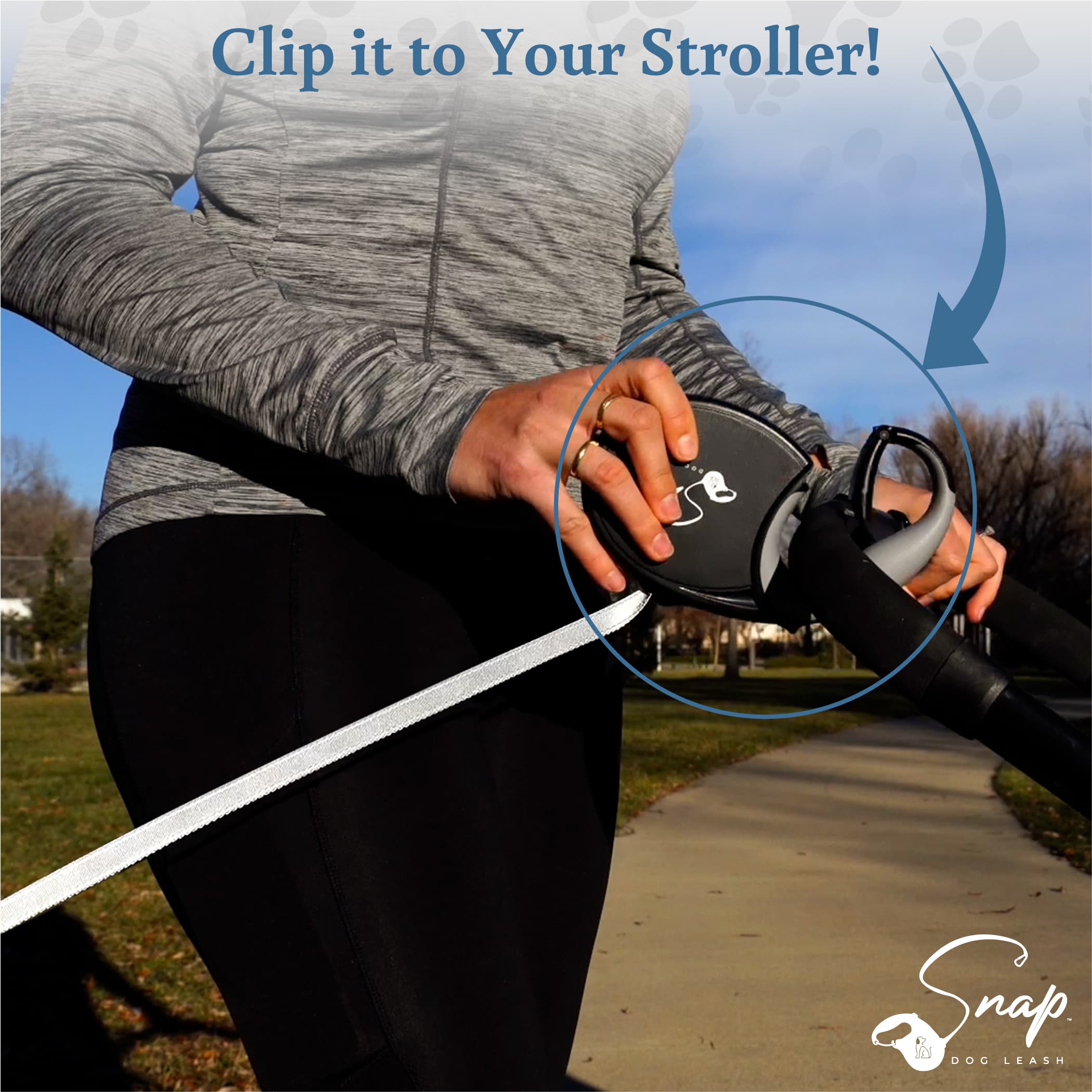
A retractable dog leash with clip — the Snap Dog Leash, specifically, since it's the only retractable leash with a spring clip built into the handle — turns any stroller into a hands-free dog walking rig in about five seconds:
- Snap the clip onto the stroller frame, low and central. Low on the frame (near the basket, on a crossbar) keeps your dog's pulling force at the stroller's most stable point, not the handlebar. The wide-mouth spring clip grips frame tubes that carabiners and knots can't manage cleanly.
- Lock the leash short. Press the one-touch lock so your dog has just enough line to walk comfortably at heel beside the stroller — roughly two to three feet. A short, locked line prevents the buildup of slack-then-yank momentum, which is what actually destabilizes strollers.
- Position your dog on your side, not the front. Dog beside the back wheel, parent's hand free to manage the brake. The dog walks next to you exactly as they would on a normal walk; the stroller just happens to be the anchor.
- Keep your thumb near the brake for transitions. Crossing a street, passing another dog, navigating a tight sidewalk — a quick brake press keeps everything tight and predictable.
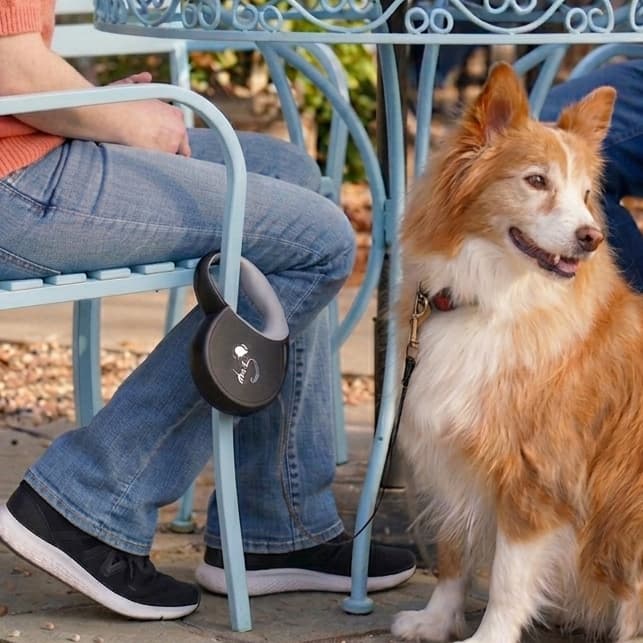
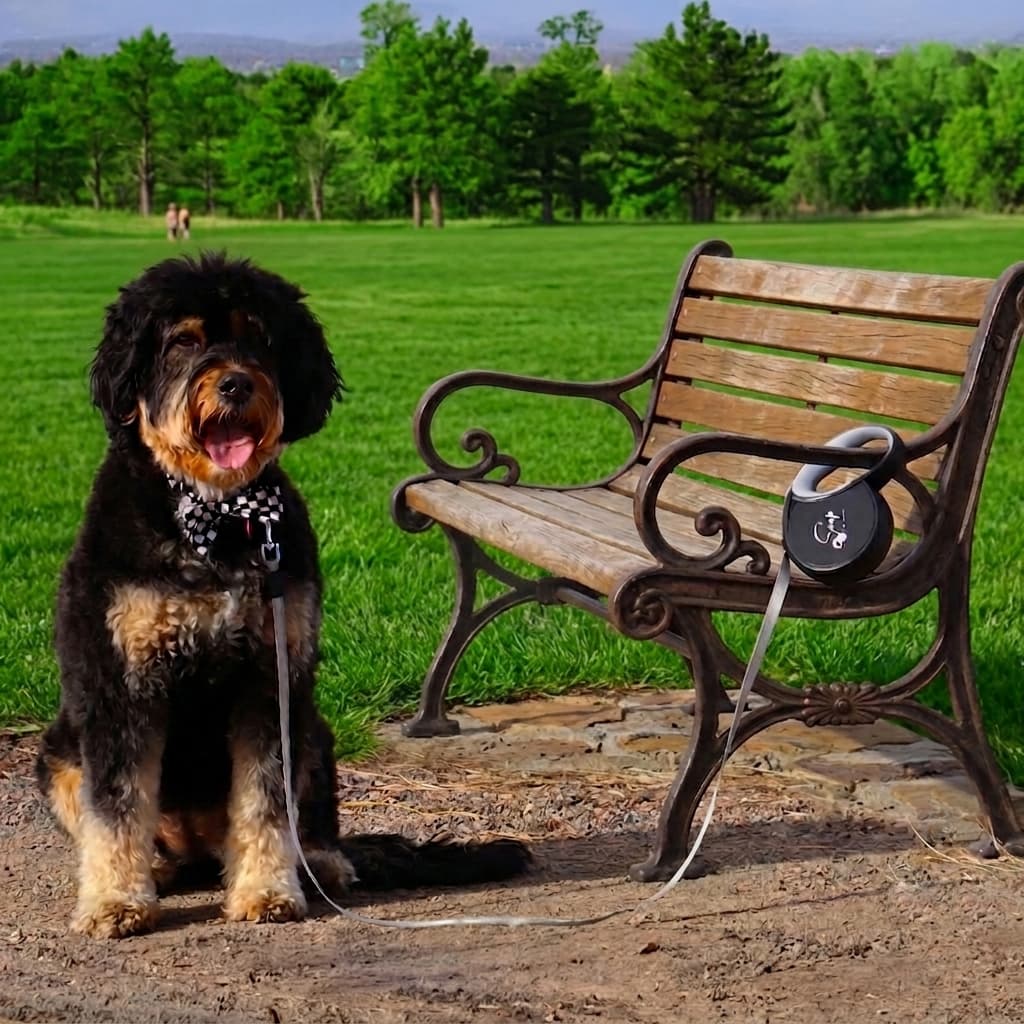
The same leash unclips in one squeeze when you arrive at the park, and the same built-in clip then snaps onto the park bench while the baby naps and the dog sniffs. One piece of gear, the entire outing.
Related Reading: See how the clip system works step-by-step in How It Works, or read how the same leash handles brewery patios and campsites.
Training Your Dog for Stroller Walks
The gear handles the mechanics; a little training handles the dog. Start before the baby arrives if you can — but it's never too late.
Introduce the stroller as furniture first. Park it in the living room for a few days. Let your dog sniff it, eat treats near it, and get bored of it before it ever moves.
Walk the empty stroller. First trips are parent, dog, and empty stroller. Your dog learns the new formation — same side every time — without the stakes. Reward generously for walking calmly at the wheel.
Teach a rock-solid "leave it" and "heel." These two commands carry the whole operation. "Heel" keeps your dog at the wheel through distractions; "leave it" handles the squirrel problem before it reaches the leash.
Keep early combined walks short. Ten relaxed minutes beats forty stressful ones. End on success, and the formation becomes your dog's new normal surprisingly fast — most dogs settle into stroller walks within a week or two of consistent reps.
Burn energy beforehand when you can. A dog who's already had a backyard fetch session is a dramatically better stroller companion. Calm in, calm out.
Safety Rules That Don't Bend
A few non-negotiables, because this setup involves your two most important passengers:
- Never attach any leash to the handlebar or canopy. Low frame attachment only.
- Match the setup to the dog. A locked, frame-clipped line works beautifully for small and medium dogs and well-trained large dogs. If you have a powerful dog with serious reactivity, hold the leash separately in your outside hand (still locked short) and work with a trainer — no attachment point beats training for a dog that can move a stroller.
- Lock before you walk. The retractable line should never be free-running while clipped to the stroller. Locked short is the whole trick.
- Brake the stroller when stopped. Any time you pause — crosswalk, chat with a neighbor — foot brake on. The stroller anchors the dog; the brake anchors the stroller.
- Stay visible. Early-morning and evening walks are stroller-walk prime time. The Snap Dog Leash's 16-foot reflective tape catches headlights along its full length.
One Leash for the Whole Family Schedule
The reason new parents gravitate to a retractable dog leash with built-in clip is honestly less about the stroller than about the day: clip it to the stroller for the morning loop, the café chair at the coffee stop, the park bench at playtime, and the patio table at dinner. Every stop on the family circuit has something to clip to, and the clip is always on the leash because it is the leash. It's patent protected, there's nothing else like it, and it's available exclusively on Amazon — see the full comparison versus standard leashes here.
Frequently Asked Questions
Can I clip a dog leash to a stroller?
Yes — safely, if you use a leash designed for it. Clip a retractable dog leash with clip low on the stroller frame (never the handlebar), lock the line to a short length, and keep your dog walking beside the rear wheel. The Snap Dog Leash's built-in spring clip attaches to stroller frames in one click.
Is it safe to tie a dog leash to a stroller handlebar?
No. The handlebar is the stroller's least stable point — a strong pull there can tip or steer the stroller. If you attach a leash to a stroller at all, it should be low on the frame with a locked, short line, and the setup should match your dog's size and training.
How do I walk a dog and push a stroller at the same time?
Use the clip-low, lock-short method: attach a retractable dog leash with built-in clip to the lower stroller frame, lock it at two to three feet, and position your dog beside the rear wheel on a consistent side. Train "heel" and "leave it," start with short walks, and keep your thumb near the brake for transitions.
What's the best dog leash for new parents?
A retractable dog leash with clip covers the most ground for new parents: hands-free stroller walks, one-click tethering at park benches and café chairs, an adjustable locked length for crowded sidewalks, and reflective tape for early-morning loops. One leash handles the whole family routine.
Will my dog pull the stroller over?
With the right setup, it's very unlikely for most dogs: a short, locked line attached low on the frame gives the dog minimal leverage and no slack to build momentum. For very large or highly reactive dogs, keep the leash in your hand instead and invest in loose-leash training first.
How long does it take a dog to get used to stroller walks?
Most dogs adapt within one to two weeks of short, consistent practice walks. Introduce the stroller stationary first, walk it empty with your dog a few times, reward calm heeling at the wheel, and keep early combined outings brief and positive.